


Functional Polyurea
What Is a Polyurea Coating
The basics: it's an elastomer, meaning that it's a polymer with elastic properties. An example of a different elastomer would be stretchy plastic film.
Manufactures create this type of polymer through step-growth polymerization, combining synthetic resin and isocyanate-reactive materials. This means it is a dual-component system. The two ingredients are mixed to form a non-toxic, impact resistant coating that can be applied to virtually any surface.Based on the different varieties of the resin and isocyanate that exist, manufacturers can produce different variations of polyurea and polyurethane. This can affect its gel and cure times, adhesion, flexibility, impact resistance, and tear strength among other special qualities.
Why Choose Us?
Quality products: We provided competent raw material preparation, chemical formulate, polyurea product supplier, industry solution, training, consulting, technical service, testing, supervision and quality control.
Rich experience: We have years of industry experience and a team of experienced engineers and technicians to ensure consistent precision and high quality of our products.
Reliable service: Our team is committed to providing reliable and consistent service, ensuring that you receive high-quality products and customer support from us every time.
Professional team: We maintain a full staff of technical engineers with complete specification and quality assurance capabilities in each application field.


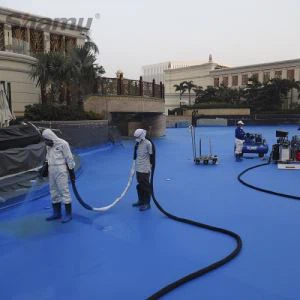


Polyurea excels at protecting wooden, concrete, and steel surfaces by enhancing impact and corrosion resistance. Industrial and commercial contractors use polyurea when they need above or below grade waterproofing for concrete structures, where it provides outstanding protection against moisture infiltration. The elastomer (or one of its poly-hybrid cousins) also finds utility in preserving boat hulls and marinas, as it can help protect watercraft from moisture and environmental damage.
With this versatility also comes great durability. Polyurea doesn't degrade easily against environmental concerns; it'll weather harsh conditions and keep your surfaces protected.
The overall usability is enhanced by the rapid gel time, which helps during application of the material. Individuals can apply polyurea even during low temperatures – in some cases down to -20° F. The elastomer will still form a strong bond to the applied surface, protecting it from future damage.
As mentioned, there can be different mixtures and formulations of resin and isocyanate. This means manufacturers can enhance certain qualities of the finished product. One of the most popular formulations includes increased tensile strength, meaning the coating is less likely to crack under pressure from flexing or movement.
Another common set of qualities that vary by formulation are the gel and tack-free times. As with the different tensile strength levels, these typical working times will also depend on your specific mixture. These will be important factors to consider for any given application. For quicker systems the average tack-free time is three to seven seconds, making it ideal for common installation challenges, like vertical or overhanging surfaces. Alternatively, a slower reaction time (sometimes up to 45 seconds or more) can give much needed workability in certain environments where speed is less critical. Either way, you'll be able to get your coating down and set in minutes with polyurea spray coating.
Lastly, one of the most beneficial properties of polyurea is that it is highly impact resistant. In fact, polyurea technology is currently in use by the military as a blast mitigation component in bulletproof armor. Coupled with a fast return-to-service, polyurea becomes an unparalleled choice when used to provide additional protection to any surface.
The Most Common Applications of Polyurea Coatings
One of the most common applications of polyurea coatings is for concrete. The coating acts as a moisture barrier as well as a structural and protective film that can be sprayed into any configuration required. This versatility in application allows for a single continuous waterproof surface, eliminating seams where water could seep in and begin deteriorating the structure below.
Food and cold storage facilities are also taking advantage of the benefits of polyurea coatings. By creating a monolithic barrier to moisture, bacteria, and debris with the sprayed-on coating, cleaning and maintenance of freezers and warehouses becomes a simple wash-down with soap and water.
Mining equipment also needs special treatment before use, allowing the gear to survive against harsh working conditions. Abrasion resistance is especially necessary, as mining equipment needs to deal with churning up earth and other dense materials. Although often not specifically "pure" polyurea coatings, abrasion resistant elastomers are usually close hybrids.
Properly applied polyurea helps battle corrosion. This comes in handy when cities and communities need to protect plumbing, sewer, and wastewater systems. These pipes need to deal with a lot of water, and that's the perfect spot for corrosion to occur, polyurea can prevent that corrosion, safeguarding both the pipes and the environment.
Another place polyurea coatings are used widely is the energy industry. Historically, fossil fuels have been extremely dangerous to the environment where they are extracted and stored, and oil & gas companies have recently turned to polyurea coatings for primary and secondary containment for these sensitive areas. Tank coatings and large site geotextile fabric coatings protect against leaks and spills; polyurea has a good degree of chemical resistance, making it a good choice for industrial usage.
Structural Features of Polyurea Molecules
Polyurea is a micro-phase-separated block polymer material composed of hard and soft segments. The hard segment consists of strongly polar urea-containing (-NH-CO-NH-) chain segments connected by hydrogen bonding and π-stacked aromatic chain segments. It is generated by the reaction of polyisocyanate and the chain extender, resulting in a glass transition temperature (Tg) above ambient temperature. The soft segment is composed of oligomeric polyol and oligomeric polyamines, providing flexibility and aliphatic chain segments. The Tg of the soft segment is typically below −30 °C. This structure makes polyurea a micro-dispersed thermoplastic cross-linked polymer at room temperature (20 °C). The soft segments exhibit superelasticity, while the hard segments display elastoplastic behavior. Hydrogen bonds are formed between the hard segments and between the hard and soft segments, creating reversible physical cross-linking and reinforcing components. These hydrogen bonds also contribute to the formation of a mesh structure [30], resulting in excellent mechanical properties such as modulus, hardness and tear strength. The soft segments contribute to the material's flexibility and low-temperature resistance. MD simulations have shown that the soft segments can store more strain energy compared to the hard segments, while energy is consumed through structural disruption and hydrogen bond dissociation of the hard segments. Polyurea (PUR1000), as synthesized by Ting Li et al was prepared through the native polymerization of polycarbodiimide-modified diphenylmethane diisocyanate and poly(tetramethylene oxide di-p-aminobenzoate). The synthesis pathways of the diisocyanate and diamine are depicted in Figure 1. In this process, P1000, comprising poly(tetramethylene oxide) (PTMO 1000) repeating units, serves as a soft chain segment in the polyurea, while the terminal phenyl ring and urea bond of the diamine are utilized as hard chain segments.
The length of the soft segments in polyurea has a significant influence on its mechanical properties both under quasi-static and dynamic conditions. When the length of the soft segments increases, the tensile strength decreases proportionally and the Tg decreases as well. In a study by D.A. Tzelepis et al. Several polyureas were synthesized with the same molecular weight of the soft segments but varying weight fractions of the hard segments. The structure of the polyurethanes was characterized using differential scanning calorimetry (DSC) and a transmission electron microscope (TEM) which revealed that the three polymers had almost the same Tg. According to the time-temperature superposition (TTS), a reduction in Tg makes the materials less susceptible to brittle damage by maintaining their elasticity during high strain rate loads, such as blast and impact loads.
The presence of urea bonds within the hard segments of polyurea plays a critical role in determining its properties. The size, properties and distribution of the hard segment region in the block copolymer can be manipulated to enhance the material's loss spectrum. Researchers have conducted several studies focusing on the thermal stability of polyurea and have observed that it undergoes one-step decomposition at high temperatures. The thermal decomposition process of polyurea initiates with the breakdown of the urea bonds within the hard segments. The thermal decomposition temperature typically falls within the range of 300 to 320 °C. To improve the thermal stability of polyurea, di- and tri-functional polyamines can be incorporated into the formulation. These additives reinforce the cross-linked structure of the material, consequently enhancing its thermal stability. By strengthening the material's structure, the added polyamines contribute to its ability to withstand higher temperatures without undergoing significant decomposition.
Optimization of Polyurea Composition
Polyurea, a highly versatile polymer, comprises both hard and soft segments in its composition. The hard segment is typically composed of isocyanates, while the soft segment consists of amino compounds. The properties of polyurea can be precisely controlled by manipulating the ratio of hard and soft. This can be achieved through varying the amount and type of isocyanates and amines. Increasing the concentration of isocyanates in polyurea leads to a higher proportion of hard segments, resulting in elevated hardness, strength and durability. Conversely, augmenting the content of amino compounds increases the ratio of soft segments, leading to enhanced flexibility, bendability and elasticity of polyurea. Thus, adjusting the isocyanate-to-amino compound ratio directly influences the balance between hard and soft segments within the polyurea structure. For example, elevating the proportion of isocyanates while reducing the amount of amino compounds can enhance the hardness and strength of polyurea, although at the expense of flexibility and bendability. This ability to tailor the ratio of hard and soft segments empowers the customization of polyurea properties to align with specific application requirements.
Different types of isocyanates and amino compounds have varying properties and reactivity. By selecting different combinations of these compounds, the ratio of hard and soft segments in polyurea can be adjusted, along with other properties such as heat resistance and chemical resistance. Polyether polyols were used as raw materials and an ester exchange reaction with p-amino benzoate was conducted to synthesize terminated aniline polyols. The resulting amine exhibited higher thermo-oxidative stability and viscosity compared to the parent polyol. The physical properties of polyurea/polyurethane elastomers prepared from these aniline-terminated end groups were evaluated in terms of reaction kinetics, tensile properties, morphology and aging properties. The study found that increasing the volume of hard segments in order to enhance elastomer hardness and tensile strength led to challenges in phase separation due to the inhomogeneous reactivity between the aniline end groups and the hydroxyl groups of the hard-segment chain extender. This hindered the desired phase separation of the hard segments.
Benefits Of Using Polyurea For Waterproofing
The effectiveness of polyurea as a waterproofing solution is highlighted by the multitude of benefits it offers. This includes rapid cure time, exceptional durability and adaptability. The attributes of polyurea mean it can be used for different types of waterproof systems.
Rapid Cure Time
Polyurea waterproofing sets itself apart with its extraordinary curing speed. Unlike traditional waterproofing systems which might take hours or even days to cure. Polyurea coatings harden within seconds to minutes of application. This swift reaction time is due to the rapid polymerisation process between the isocyanate and the resin. The advantage of this rapid cure time is twofold. First, it significantly reduces the downtime during the application process, enabling faster project completions. Second, it allows the waterproofed area to be back in service quickly, minimising disruption, which is particularly beneficial in industrial and commercial settings where downtime can be costly. This has made polyurea very popular in both commercial and residential applications. Applications where polyurea is used include; for commercial roofing and as a garage floor coating.
Exceptional Durability
The durability of polyurea coatings is one of their standout features. These coatings create a dense, seamless membrane which demonstrates high tensile strength and tear resistance. This enables it to withstand significant wear and tear. This durability is further enhanced by the coating's excellent abrasion and impact resistance. The result is a waterproofing solution which effectively guards against the ingress of water. This protects the substrate from potential water damage, corrosion, and the destructive forces of freeze-thaw cycles. This robustness extends the service life of the structures it protects, offering a long-term waterproofing solution.
Superior Resistance
Polyurea displays exceptional resistance to a wide range of harsh conditions. This makes it an excellent choice for demanding applications. Its superior temperature resistance allows it to function effectively in both extreme heat and cold, maintaining its integrity from -40°F to over 350°F. Moreover, polyurea exhibits remarkable resistance to ultraviolet radiation, helping to prevent the degradation often associated with prolonged UV exposure. Additionally, it has excellent resistance to a variety of chemicals, including solvents, oils, and salts. This makes it particularly suitable for use in industrial environments where such exposure may be inevitable.
High Flexibility
Polyurea's high elongation capacity is a testament to its flexibility. It can stretch and contract with the substrate, accommodating movements due to temperature changes or other dynamic forces. This elasticity can reach up to 600% elongation. This enables polyurea to maintain its waterproofing capabilities even when applied to surfaces with frequent movement or vibration. This includes surfaces such as bridges, vehicles, and machinery. This flexibility combined with a seamless finish makes polyurea an excellent choice for waterproofing irregular shapes and complex geometries.
Excellent Adhesion
Polyurea demonstrates excellent adhesion properties, forming a strong bond with a variety of substrates.This includes metal, wood and concrete coating. The excellent adhesion of polyurea coatings ensures a seamless and continuous waterproof barrier. This eliminates the possibility of leaks at the joints or seams, a common issue with traditional waterproofing systems. Moreover, this superior adhesion contributes to the overall durability and longevity of surfaces which are waterproofed with polyurea coatings.
Minimal Maintenance Needs
Despite its superior performance, polyurea coatings requires minimal maintenance. Its robust physical properties and resistance to environmental factors minimize the need for repairs or replacements. Regular inspections and routine cleaning are normally sufficient to maintain the performance of the polyurea coating. The low-maintenance requirements reduces long-term costs, further enhancing the cost-effectiveness of polyurea coatings.
The Properties Of Polyurea
Below will dissect the physical and chemical attributes, durability, and resistance factors of polyurea. This will highlight why it's a such a popular choice to waterproofing applications.
1. Physical And Chemical Properties Of Polyurea
Polyurea boasts several desirable physical and chemical properties. Its high tensile strength (typically around 3000 psi) and elongation capabilities (up to 600%) contribute to its superior flexibility. Its density, approximately 1.1 g/cm³, aids in maintaining structural integrity. Chemically, polyurea demonstrates strong resistance to water, UV radiation and various chemicals (including salt solutions, oils, and various solvents). This helps ensure minimal degradation over time.
2. Durability And Longevity Of Polyurea Waterproofing
Polyurea's robust durability contributes to its extended longevity. It can withstand prolonged exposure to tough conditions without sacrificing its protective quality. In fact, when properly applied and maintained, polyurea waterproofing systems have been reported to last upwards of 25 to 30 years.
3. Weather, Chemical And UV Resistance
Polyurea shows unparalleled resistance to a myriad of conditions. It remains stable across a wide range of temperatures. This is from as low -40°F to as high as over 350°F. Pure polyurea coatings also retain elasticity in cold climates. Its excellent UV resistance allows it to maintain its colour and physical properties, even when enduring prolonged exposure to sunlight.

Applications Of Polyurea Waterproofing
Polyurea is a multifaceted waterproofing solution. Its attributes perform across a broad range of applications. It is the unique combination of properties like high durability, flexibility, and rapid curing which make it so versatile. Below we will look at the versatility of polyurea coatings across a range of different applications.
1. Polyurea Coatings For Roof Waterproofing
The dynamic nature of polyurea makes it a leading solution for roof waterproofing. Applied as a liquid, it creates a continuous, seamless membrane. Substrates which can be coated include metal, wood, and concrete. With polyurea concrete coatings being the most common use case. More than just a barrier, polyurea also fills in the cracks and joints on roofs. This provides a complete waterproof layer. Given the exposure of rooftops to weather and UV radiation, polyurea's resilience to these factors amplifies its suitability.
2. Polyurea Coatings For Foundation And Basement Waterproofing
Structural foundations and basements are particularly prone to water infiltration. Polyurea emerges as a highly effective solution for these areas. This is due to its hydrophobic nature and strong adhesion capabilities. It not only stops water seepage but also counters the potential for mould and mildew growth. This improves overall building health.
3. Application In Industrial Flooring And Lining
Industrial floors are subject to heavy traffic, impact, and often chemical exposure. Polyurea's inherent mechanical properties, coupled with its chemical and abrasion resistance, make it a favourable floor coating for industrial and commercial applications. Examples of use cases include using polyurea coatings for car parks and garage floors.
4. Polyurea Coatings For Water And Wastewater Treatment Facilities
The operational nature of water and wastewater treatment plants entails constant water exposure and frequent encounters with a variety of chemicals. The robust chemical resistance and watertight properties of polyurea render it a suitable lining for tanks, basins, and pipes within these facilities.
5. Polyurea Coatings For Defence And Security Sectors
Polyurea coatings can be used for applications within the defence and security industry due to their remarkable properties and versatility. A military equipment coating requires excellent reliability. And polyurea coatings fit the bill. They are known for their exceptional durability, rapid curing, and resistance to a wide range of environmental factors. This includes extreme temperatures, chemicals, and abrasion. In the defence sector, polyurea is commonly used to protect military vehicles, equipment, and infrastructure against corrosion, impact, and wear. They serve as effective protective barriers, shielding critical assets from damage and extending their lifespan. Additionally, the rapid curing time of polyurea coatings allows for efficient and quick application. This makes them particularly beneficial for military operations where rapid deployment and readiness are essential. Whether coating military buildings, armoured vehicles or even sensitive electronic equipment, polyurea waterproofing play a vital role. They enhance the resilience and longevity of defence and security assets.
The Process Of Applying Polyurea Waterproofing
Polyurea waterproofing, recognised for its resilience and swift application, is fast becoming a preferred method in the waterproofing industry. However, for this technology to function at its optimal level, one must follow a stringent set of steps.
1. Surface Preparation
A project's success pivots on the foundation, surface preparation. Correctly prepared surfaces promote superior adhesion, ensuring long-lasting results.
● Cleaning: Using industrial-grade solvents or detergents, remove contaminants like dirt, oils, or residues. It's essential to ensure no residue from the cleaning agents remains, as this might affect adhesion.
● Dust and Rust Removal: Employing techniques like high-pressure washing or sandblasting ensures the surface is free from rust, old paint, or loose debris. Sandblasting, in particular, can provide a textured surface ideal for adhesion.
● Surface Profiling: This involves creating a slightly abrasive profile on the surface. Similar to sanding wood before painting, this process enhances the bond strength, ensuring the polyurea effectively adheres to the substrate.
2. Equipment Maintenance and Calibration
● Avoid Nozzle Clogs: Over time, residues can build up at the nozzle, disrupting the smooth flow of polyurea during application.
● Ensure Calibration: Consistency is key. Regularly calibrating the equipment ensures the isocyanate and resin blend in the correct ratios, promoting the best possible chemical reaction and end product.
● Control Temperature: The equipment's heating mechanism needs to be monitored. If the polyurea mixture becomes too hot or not heated enough, it can influence its behaviour during application and curing.
3. Ambient Conditions
● Temperature: While polyurea can be applied in a range of temperatures, extreme cold can cause the material to become too viscous, leading to challenges in application. Conversely, extremely high temperatures might accelerate the reaction rate, reducing the time professionals have to work with the material.
● Humidity: High levels of moisture in the air can affect the behaviour of polyurea during application. Polyurea is moisture-cured, meaning it reacts with humidity. If too much moisture is present during application, it can cause defects like foaming, blistering, or poor adhesion.
● Ventilation: Especially when working indoors, ensuring proper ventilation is critical. This not only helps control humidity but also ensures that any fumes from the application process are safely dispersed.
4. Curing Process And Timeframes
The curing process of polyurea is an intricate dance of chemistry that's both swift and efficient. Let's explore it step-by-step:
● Initial Gel Phase: Moments after the polyurea is sprayed onto the surface, it enters the "gel phase". This is a transitional stage where the material starts to solidify but hasn't achieved its full rigidity. This phase is relatively short, often lasting just a few seconds to a couple of minutes.
● Tack-Free Phase: Immediately following the gel phase, polyurea transitions to the tack-free state. In this stage, the surface can be touched without any material sticking when touched. This usually happens within a few minutes of application, effectively nullifying chances of dust, debris, or foreign particles compromising the finish.
● Full Cure Phase: While the surface is touch-ready almost instantaneously, polyurea's internal curing continues. Over the span of 24 to 48 hours, the compound bonds further, reaching its zenith in terms of both structural strength and chemical resistance.
5. Finishing And Post-Application Considerations
After polyurea has undergone its rapid curing process, it is paramount to ensure the application is up to the expected standards. This entails meticulous observation and the use of specialised tools:
● Wet Film Thickness Gauges: Employing tools like wet film thickness gauges is crucial. These gauges are designed to measure the thickness of the polyurea layer while it's still wet, giving an immediate indication of whether the application is uniform. Consistency in thickness ensures the waterproofing's effectiveness and longevity.
● Dry Film Thickness Gauges: Once the polyurea has cured, using a dry film thickness gauge can be advantageous. This tool uses magnetic induction or ultrasonic waves to determine the thickness of the dried polyurea coat, ensuring it meets project specifications.
● Potential Imperfections To Watch For
(1). Pinholes: These tiny punctures, often invisible to the naked eye, can compromise the waterproofing properties of the polyurea layer. Over time, water or other substances could penetrate these holes, leading to potential damage.
(2). Blisters: These raised areas on the polyurea surface indicate trapped air or moisture. Blisters can weaken the coat's structural integrity, making the area more susceptible to breaches or peeling.
(3). Non-Adhering Zones: These are sections where the polyurea hasn't bonded well with the substrate. Such areas are vulnerable. They might peel off or get detached under stress or when exposed to water. This is obviously a problem and undermines the waterproofing purpose.
● Corrective Measures
(1). Patchwork: For smaller imperfections like pinholes or minor non-adhering zones, patchwork can be done. This involves cleaning the area and applying a small amount of polyurea to seal the defect.
(2). Re-application: In cases where large sections of the surface exhibit imperfections or if there's a significant inconsistency in thickness, it might be prudent to consider re-application. While this is more time-consuming and could mean higher costs, ensuring the integrity of the polyurea coat is paramount for the long-term success of the waterproofing project.
While polyurea boasts rapid application and curing, the post-application phase is critical. A meticulous inspection, followed by appropriate corrective actions, ensures that the waterproofing serves its purpose effectively and endures over time.
The world of polyurea waterproofing is not static, it's evolving. Innovations are constantly surfacing, pushing the boundaries of what's possible. These innovations range from the development of new polyurea systems through to the application of polyurea in green construction practices.
● Advances In Polyurea Technology And Materials
Breakthroughs in polyurea technology are ushering in a new era of waterproofing. Recent advancements encompass the advent of hybrid coating systems. These systems consists of the strengths of polyurea blended with polyurethane. Developments also extend to the creation of more environmentally friendly formulations to reduce volatile organic compounds (VOCs) emissions and the refinement of application equipment.
● Using Polyurea Waterproofing In Green And Sustainable Construction
As the construction sector increasingly prioritizes sustainability, polyurea waterproofing is stepping up to the plate. It is perfectly suited to be used as a moisture barrier to reduce wastage. This due to having a long lifespan and excellent durability. This makes polyurea perfectly aligned with green building standards. Furthermore, the advent of more eco-friendly polyurea formulations is enabling it to meet the sustainability criteria of various construction projects.

To harness the full potential of polyurea waterproofing, there are certain best practices that need to be adhered to. These range from correct installation procedures and surface preparation to routine maintenance and rigorous quality control checks.
● Importance Of Proper Installation And Surface Preparation
The foundation of a successful polyurea waterproofing application lies in meticulous installation and diligent surface preparation. The surface must be thoroughly clean, devoid of moisture, and free from any contaminants to ensure robust adhesion. In addition, the application process must be conducted by trained professionals to secure a uniform and continuous membrane.
● Tips For Long-Term Maintenance And Care
While polyurea's strength lies in its minimal maintenance needs, conducting regular inspections can be instrumental in identifying potential problems early. Despite its innate resistance to various elements, maintaining cleanliness and keeping the polyurea surface free from debris are crucial steps to ensure its long-lasting performance.
● Ensuring Thorough Inspections And Quality Control
Vigilant quality control checks are crucial for the longevity and performance of the polyurea coating. Conducting inspections before, during, and after application, measuring the coating's thickness, and performing adhesion tests are among the recommended practices. These checks can not only verify the proper application of the coating but also prevent possible issues in the future.
Our Factory
Qingdao Shamu Advanced Material Co., Ltd. the most professional pure polyurea supplier in China, respects science and takes honesty and faith as the foundation of the career. Our company since its inception always gives top priority to product quality, and has developed series pure polyurea products with the latest technology and high quality, and has inaugurated the sample project, model project and monumental project of pure polyurea,which makes you project long-term undertaking with monumental merits that benefit the future!


Our Certificate


