

As a supplier of Anti Mildew Polyurea, I often encounter various questions from customers regarding the versatility and applicability of our product. One question that has recently piqued my interest is whether Anti Mildew Polyurea can be used in a vacuum environment. This topic not only involves the basic properties of Anti Mildew Polyurea but also requires a deep understanding of the unique characteristics of vacuum environments. In this blog, I will delve into this issue from a scientific perspective and share my insights.
Understanding Anti Mildew Polyurea
Before discussing its use in a vacuum environment, let's first understand what Anti Mildew Polyurea is. Anti Mildew Polyurea is a type of functional polyurea coating that is specifically formulated to resist the growth of mildew. It combines the excellent physical properties of polyurea, such as high abrasion resistance, good flexibility, and strong adhesion, with anti - mildew functionality. This makes it an ideal choice for applications where moisture and mildew are common problems, such as bathrooms, basements, and swimming pools.
You can learn more about different types of polyurea coatings on our website. For instance, our Antibacterial Polyurea Coating and Antimicrobial Polyurea for Swimming Pools are designed to meet specific needs in different scenarios. And of course, our Anti Mildew Polyurea is the core product we are discussing here.
Characteristics of a Vacuum Environment
A vacuum environment is characterized by extremely low pressure, which means there is very little gas or matter present. In a vacuum, several phenomena occur that can affect materials:
- Outgassing: Materials can release trapped gases or volatile substances in a vacuum. This outgassing can cause contamination of the environment and may also lead to changes in the material's properties over time.
- Thermal Conductivity Changes: Without the presence of gas molecules to transfer heat, heat transfer in a vacuum occurs mainly through radiation. This can lead to significant temperature differences between different parts of a material.
- High - Energy Particle Exposure: In some vacuum environments, such as in space, materials are exposed to high - energy particles like cosmic rays, which can cause damage to the molecular structure of the material.
Can Anti Mildew Polyurea be Used in a Vacuum Environment?
Chemical Stability
Anti Mildew Polyurea is a polymer material with a relatively stable chemical structure. The anti - mildew agents incorporated into the polyurea are usually designed to be chemically stable under normal environmental conditions. However, in a vacuum, the lack of oxygen and the presence of high - energy particles may potentially cause chemical reactions in the anti - mildew agents or the polyurea matrix itself.
Most anti - mildew agents work by inhibiting the growth of fungi and bacteria. These agents are often organic compounds that may be susceptible to degradation in the high - energy environment of a vacuum. For example, some anti - mildew agents may break down under the influence of cosmic rays, losing their anti - mildew functionality.
On the other hand, the polyurea matrix is generally more resistant to chemical changes. Polyurea is known for its good chemical resistance, which means it can withstand a certain degree of chemical stress. But in a long - term vacuum environment, especially when exposed to high - energy radiation, the polyurea may experience cross - linking or chain scission reactions, which can change its mechanical properties.
Outgassing
Outgassing is a major concern when using any material in a vacuum environment. Anti Mildew Polyurea may contain small amounts of solvents, plasticizers, or other volatile substances that were used during the manufacturing process. In a vacuum, these substances can be released, causing outgassing.
If the outgassing rate is too high, it can contaminate the vacuum environment. For example, in a space application, the outgassed substances can condense on sensitive optical or electronic components, affecting their performance. To minimize outgassing, the Anti Mildew Polyurea needs to be properly cured and degassed before being used in a vacuum. This may involve a long - term curing process at elevated temperatures and under reduced pressure to remove as many volatile substances as possible.
Mechanical Properties
The mechanical properties of Anti Mildew Polyurea can also be affected in a vacuum environment. As mentioned earlier, the thermal conductivity changes in a vacuum can lead to significant temperature differences within the material. This can cause thermal expansion or contraction, which may result in internal stresses in the polyurea coating.
If the internal stresses are too high, they can cause cracking or delamination of the coating. Moreover, the high - energy particles in a vacuum can damage the molecular structure of the polyurea, reducing its strength and flexibility. For example, the impact of cosmic rays can break the chemical bonds in the polyurea chains, leading to a decrease in its tensile strength.
Potential Applications and Precautions
Despite the challenges, there are still some potential applications for Anti Mildew Polyurea in a vacuum environment.

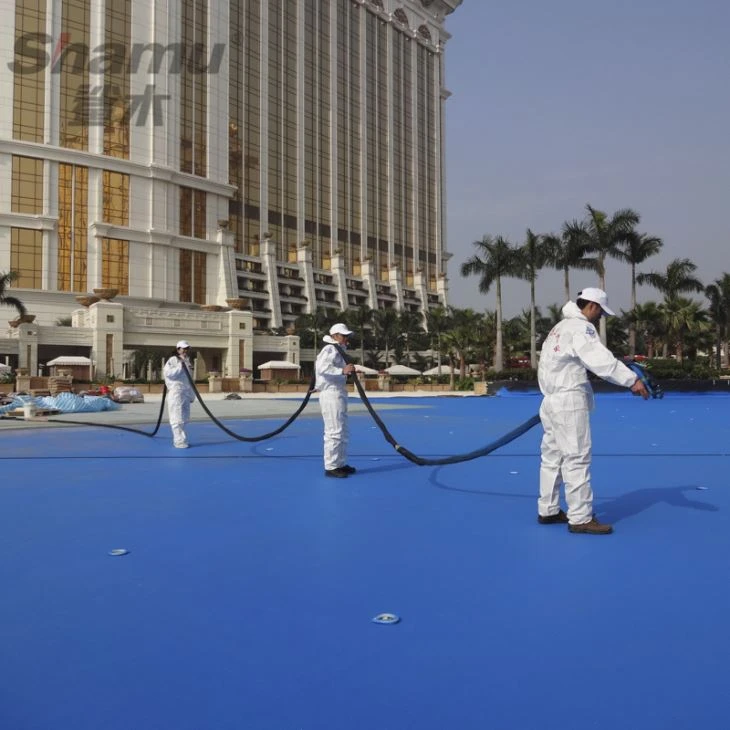
Spacecraft Interior Coatings
In some cases, spacecraft interiors may need protection against microbial growth. Although the vacuum environment in space is not conducive to the growth of fungi and bacteria, there may be situations where the spacecraft is exposed to Earth - like environments during launch, docking, or crew activities. Anti Mildew Polyurea can be used as a coating on the interior walls of the spacecraft to prevent the growth of microorganisms in these situations.
However, before using Anti Mildew Polyurea in spacecraft, extensive testing is required. The polyurea needs to be tested for its outgassing rate, radiation resistance, and mechanical stability in a simulated space environment. Special formulations may also be needed to enhance its performance in a vacuum.
Vacuum Chambers on Earth
On Earth, vacuum chambers are used in various industries, such as semiconductor manufacturing and materials research. In some cases, these chambers may need to be protected against mildew growth, especially if they are located in humid environments. Anti Mildew Polyurea can be used as a coating on the interior walls of the vacuum chambers.
When using Anti Mildew Polyurea in vacuum chambers on Earth, the same precautions regarding outgassing and mechanical stability apply. The polyurea should be properly prepared and tested to ensure that it does not contaminate the vacuum environment or cause any damage to the equipment inside the chamber.
Conclusion
In conclusion, while using Anti Mildew Polyurea in a vacuum environment is possible, it comes with many challenges. The chemical stability, outgassing characteristics, and mechanical properties of the polyurea need to be carefully considered. Through proper formulation, preparation, and testing, Anti Mildew Polyurea can potentially be used in certain vacuum applications, such as spacecraft interiors and vacuum chambers on Earth.
If you are interested in exploring the potential of using Anti Mildew Polyurea in your specific vacuum application, we encourage you to contact us for a detailed discussion. Our team of experts can provide you with more information and help you find the best solution for your needs.
References
- "Polymer Science and Engineering" by Donald R. Paul and Charles B. Bucknall
- "Spacecraft Materials and Processes Handbook" by NASA


