

Aliphatic polyurea is a remarkable material that has gained significant traction in various industries. As a leading supplier of Aliphatic Polyurea, I've witnessed firsthand its versatility and outstanding performance. One of the most critical aspects of evaluating any material is understanding how it behaves under different environmental conditions, especially low - temperature environments. In this blog, we'll explore the performance of aliphatic polyurea in cold settings.
Understanding Aliphatic Polyurea
Before delving into its low - temperature performance, it's essential to grasp what aliphatic polyurea is. Aliphatic polyurea is a type of polyurea coating formed through the reaction of an isocyanate component and a resin blend component. It is known for its excellent UV resistance, non - yellowing properties, and high - performance characteristics such as abrasion resistance, chemical resistance, and flexibility. These features make it suitable for a wide range of applications, from industrial flooring to marine coatings and automotive parts.

Chemical Structure and Low - Temperature Resistance
The unique chemical structure of aliphatic polyurea plays a crucial role in its low - temperature performance. The polymer chains in aliphatic polyurea are relatively flexible due to the absence of aromatic rings. This flexibility allows the material to maintain its mechanical properties even at low temperatures. When the temperature drops, many materials become brittle as their molecular movement slows down. However, the flexible chains in aliphatic polyurea can still move to some extent, preventing the material from becoming overly rigid and cracking.
Mechanical Properties in Low - Temperature Environments
Tensile Strength
Tensile strength is a key mechanical property that measures a material's ability to withstand stretching forces. In low - temperature environments, aliphatic polyurea generally shows a slight increase in tensile strength. As the temperature decreases, the intermolecular forces within the polyurea become stronger, making it more resistant to stretching. However, it's important to note that this increase is within a reasonable range, and the material doesn't become so hard that it loses its other beneficial properties.
Elongation at Break
Elongation at break refers to the maximum amount a material can stretch before it breaks. Aliphatic polyurea maintains a relatively high elongation at break even in cold conditions. This is crucial because it allows the coating to expand and contract with the substrate as the temperature fluctuates. For example, in outdoor applications where the substrate may be exposed to extreme temperature changes, the ability of aliphatic polyurea to stretch without breaking helps prevent coating failure and cracking.
Impact Resistance
Impact resistance is another vital property, especially in industrial and automotive applications. In low - temperature environments, aliphatic polyurea retains its good impact resistance. The flexible polymer chains can absorb the energy from an impact, reducing the likelihood of damage. This is in contrast to many other materials that become more prone to cracking and chipping when exposed to impacts at low temperatures.
Adhesion in Low - Temperature Conditions
Good adhesion is essential for any coating to perform effectively. Aliphatic polyurea typically exhibits strong adhesion to a variety of substrates, including concrete, steel, and wood. In low - temperature environments, proper surface preparation becomes even more critical. The substrate needs to be clean, dry, and free of any contaminants to ensure optimal adhesion. Once applied correctly, aliphatic polyurea forms a strong bond with the substrate, even in cold weather. This is because the chemical reaction that forms the polyurea coating can still occur at lower temperatures, although the curing time may be slightly longer.
Curing Process in Cold Weather
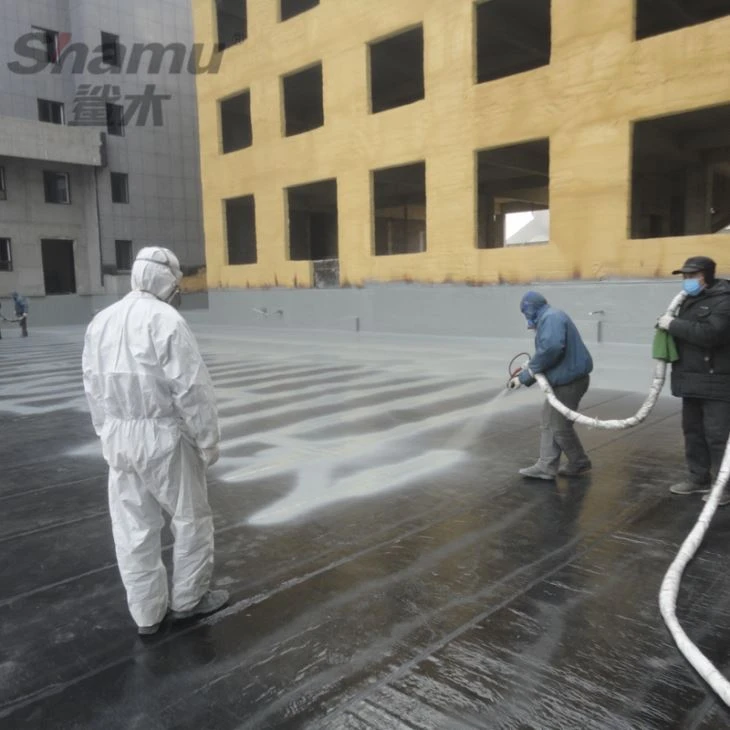
The curing process of aliphatic polyurea is affected by temperature. In low - temperature environments, the reaction between the isocyanate and the resin blend components slows down. This means that the curing time will be longer compared to warmer conditions. However, with the right formulation and application techniques, it is still possible to achieve a fully cured coating. Some aliphatic polyurea products are specifically designed for cold - weather applications, with additives that can accelerate the curing process at lower temperatures.
Applications in Low - Temperature Environments
Industrial Flooring
In industrial facilities located in cold regions, aliphatic polyurea flooring is an excellent choice. Its high abrasion resistance, impact resistance, and ability to maintain its mechanical properties in low temperatures make it suitable for heavy - traffic areas. For example, in warehouses where forklifts and other equipment are constantly moving, the polyurea coating can withstand the wear and tear, even in cold storage areas.
Marine Applications
In the marine industry, ships and offshore structures often operate in cold waters. Anti Corrosion Polyurea coatings are used to protect these structures from corrosion and damage. Aliphatic polyurea's low - temperature performance ensures that the coating remains intact and provides long - term protection, even in harsh marine environments where the temperature can drop significantly.
Automotive Parts
Automotive parts exposed to cold weather, such as bumpers and underbody coatings, can benefit from aliphatic polyurea. Its flexibility and impact resistance at low temperatures help protect the parts from damage caused by road debris and temperature changes. Additionally, the non - yellowing property of aliphatic polyurea ensures that the appearance of the automotive parts remains consistent over time.
Challenges and Considerations
While aliphatic polyurea performs well in low - temperature environments, there are some challenges and considerations. As mentioned earlier, the curing time is longer in cold weather, which may require careful planning of the application process. Additionally, extreme cold can still pose challenges, and in some cases, additional heating or insulation may be necessary during the application and curing process.
Conclusion
Aliphatic polyurea is a high - performance material that demonstrates excellent performance in low - temperature environments. Its unique chemical structure allows it to maintain its mechanical properties, adhesion, and flexibility even when the temperature drops. Whether it's for industrial flooring, marine applications, or automotive parts, aliphatic polyurea offers reliable protection and durability.
If you're in need of high - quality aliphatic polyurea products for your project, especially in low - temperature environments, we'd love to have a discussion with you. Our team of experts can provide you with detailed information and guidance on the best solutions for your specific needs. Contact us to start the procurement and negotiation process, and let's work together to achieve your project goals.
References
- ASTM International. "Standard Test Methods for Tensile Properties of Plastics." ASTM D638.
- ISO. "Plastics - Determination of Tensile Properties." ISO 527.
- Technical literature from leading polyurea manufacturers on cold - weather applications.


